
Radon Mitigation in Youngstown, OH
Youngstown anchors the Mahoning Valley metro of approximately 530,000 along the OH-PA border in Northeast Ohio. Mahoning County sits in EPA Radon Zone 1 and records some of the highest county averages in Ohio. Youngstown's geology is Mississippian Berea Sandstone and Devonian Ohio Shale — both significant radon sources. The Mahoning Valley sits within the Appalachian Plateau province where uranium-bearing shales are exposed and weathered.
- ✓ NRPP + ODH Certified Partner Network
- ✓ Free Quotes · No Upfront Cost
- ✓ Ohio Statewide Coverage
Who provides radon mitigation in Youngstown, OH?
Ohio Radon Experts connects Youngstown homeowners with NRPP-certified radon mitigation specialists serving Mahoning County. Youngstown averages 3.2 pCi/L on average, below the EPA action level of 4.0; but radon varies home to home and homes here still test high, so testing and mitigation are routed to a qualified local partner, typically within hours. Free quote within 24 hours. Call (614) 626-9115.
Why Do Youngstown Homes Have Elevated Radon?
Youngstown anchors the Mahoning Valley metro of approximately 530,000 along the OH-PA border in Northeast Ohio. Mahoning County sits in EPA Radon Zone 1 and records some of the highest county averages in Ohio. Youngstown's geology is Mississippian Berea Sandstone and Devonian Ohio Shale — both significant radon sources. The Mahoning Valley sits within the Appalachian Plateau province where uranium-bearing shales are exposed and weathered.
Geology: Youngstown sits in the Appalachian Plateau with exposed Mississippian Berea Sandstone and uranium-bearing Devonian Ohio Shale. The Mahoning Valley's terrain channels groundwater through fractured bedrock, drawing radon-bearing soil gas toward home foundations. Hillside-foundation homes are common.
Permits: Youngstown Department of Building Inspections building permits may apply to slab penetration or exterior venting work. Ohio Department of Health (ODH) Radon Licensing per Ohio Admin. Code Chapter 3701-69 is required for any radon mitigation contractor performing work in Youngstown.
Neighborhoods we serve in Youngstown: Downtown, Brier Hill, North Side, South Side, Boardman, Canfield, Poland, Austintown.
All Youngstown radon work is performed by NRPP-certified, ODH-certified partner contractors routed through Ohio Radon Experts.
How Does Youngstown Compare on Ohio Radon Levels?
Mahoning County averages 3.2 pCi/L indoor radon — below the EPA action level of 4 pCi/L on average, though individual homes still test high. Here's how Youngstown's radon profile compares to other Ohio cities we serve.
| Metric | Youngstown, OH | Ohio State Average | US National Average |
|---|---|---|---|
| Average indoor radon | 3.2 pCi/L | 4.7 pCi/L | 1.3 pCi/L |
| EPA Radon Zone | Zone 1 | Zone 1 (majority) | Varies (Zones 1–3) |
| % homes elevated (>4 pCi/L) | 46% | ~33% (1 in 3) | ~6% |
| Multiple of EPA action level | 0.8x | 2.1x | 0.3x |
| EPA action level | 4.0 pCi/L | 4.0 pCi/L | 4.0 pCi/L |
Check Your Youngstown Radon Test Result Against the EPA Action Level
Enter your radon test result (in pCi/L) to see whether your Youngstown, OH home meets the EPA action level of 4.0 pCi/L — and exactly what to do next based on official EPA guidance. Youngstown averages 3.2 pCi/L, with 46% of homes testing elevated.
Enter the picocuries-per-liter value from your charcoal canister or continuous radon monitor (CRM) report.
How the calculator maps test results to EPA guidance
| Radon level (pCi/L) | Risk tier | EPA-aligned recommendation |
|---|---|---|
| 0.0 – 1.9 | Below average — low | No action needed. Re-test every 2 years or after major renovation. |
| 2.0 – 3.9 | Elevated — EPA "consider mitigating" | Consider mitigation, especially with smokers, children, or lower-level bedrooms. Run a long-term (90+ day) test for confirmation. |
| 4.0 or higher | EPA Action Level — fix the home | Install an active radon mitigation system. EPA recommends fixing the home as soon as practical. |
Which Radon Services Are Available in Youngstown?
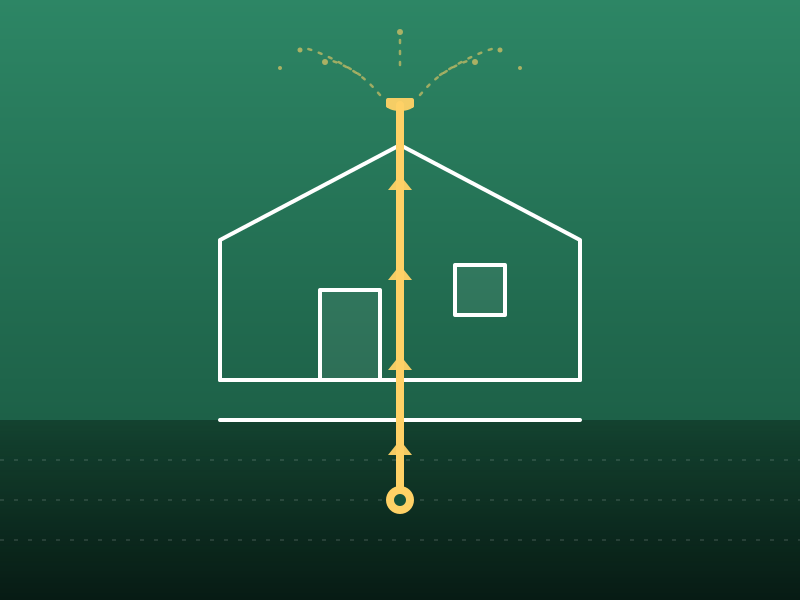
Radon Mitigation
Active radon mitigation system installation for Ohio homes — sub-slab depressurization is the most common method, reducing indoor …
Learn more →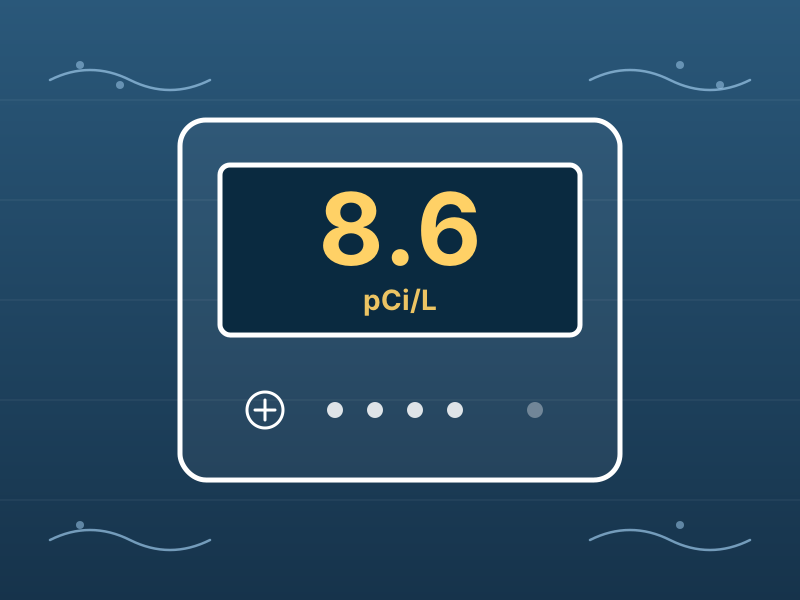
Radon Testing
Professional radon testing services for Ohio homes — short-term (2-7 day) and long-term (90+ day) testing options. Required for mo…
Learn more →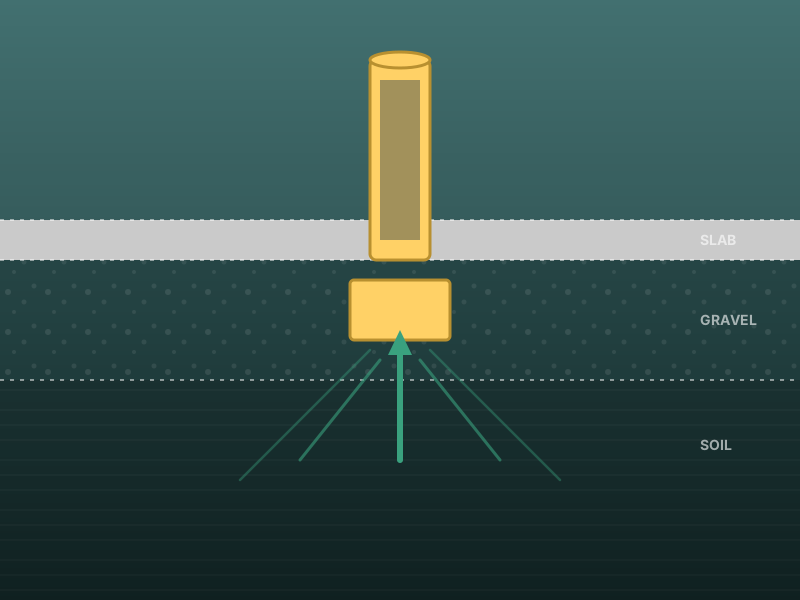
Sub-Slab Depressurization Installation
Ohio's most common radon mitigation method — sub-slab depressurization (ASD) creates negative pressure beneath the basement slab, …
Learn more →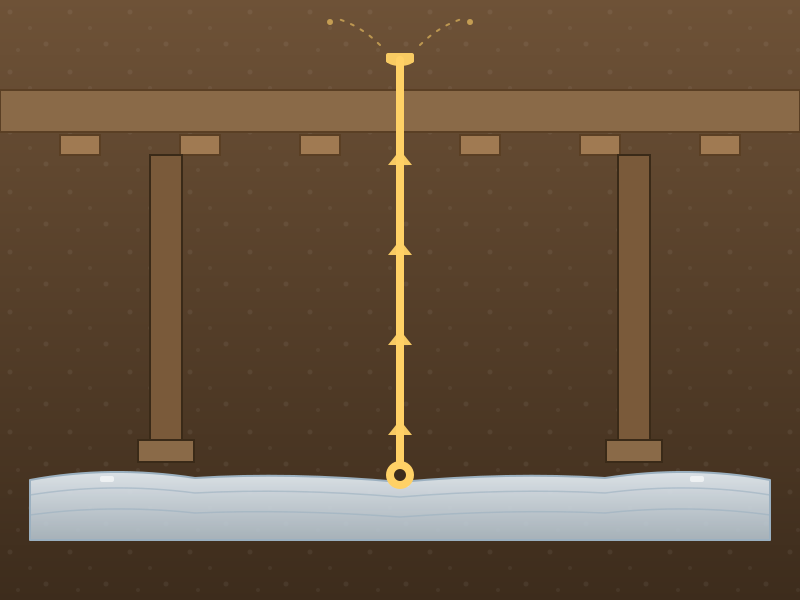
Crawl Space Radon Mitigation
Sub-membrane depressurization for Ohio homes with crawl spaces — includes vapor barrier installation, sealing, and active depressu…
Learn more →Do Youngstown Real Estate Transactions Require Radon Testing?
Ohio Residential Property Disclosure Act (Ohio Rev. Code § 5302.30) requires sellers to disclose any known radon test results to buyers. In practice, most Youngstown real estate transactions now include a radon contingency in the purchase agreement — and given that 46% of Youngstown homes test elevated, buyers are increasingly insisting on pre-closing mitigation when results exceed 4 pCi/L.
Our partner contractor network handles closing-timeline mitigations within typical 7–14 day windows, including post-mitigation verification testing to satisfy lender and inspector requirements.
Are Winter Radon Levels Higher in Youngstown?
Yes. Youngstown's cold winters intensify radon entry through the stack effect — heated indoor air rising creates negative pressure in basements that pulls soil gas into the home at higher rates than warmer climates. Youngstown winter radon readings are typically 30–50% higher than summer readings.
EPA recommends radon testing under closed-house conditions, which align naturally with Youngstown winters. If your Youngstown home tested low in summer, retest in winter for an accurate baseline before deciding on mitigation.
Recent Youngstown Radon Mitigation Projects
Recent radon mitigation projects across Ohio — every image is geo-tagged to a specific Ohio city and entity-described for transparency and provenance. All work performed by NRPP-certified, ODH-certified partner contractors.
 📍 Philadelphia, Ohio
  📍 Pittsburgh, Ohio
  📍 State College, Ohio
  📍 West Philadelphia, Ohio
 Youngstown, OH Radon FAQs
What are typical radon levels in Youngstown?
Why are Youngstown radon levels so high?
How do I find a certified radon mitigation contractor in Youngstown?
How long does it take to schedule radon mitigation in Youngstown?
The Closest Ohio Metros to Youngstown We Also Serve
The nearest cities to Youngstown in our statewide partner network. Click any for its county radon average, local profile, and a free quote.
Ready to Get a Free Youngstown Radon Quote?
Same-day routing to a Mahoning County NRPP-certified partner. Written quote within 48 hours of site assessment.